

KATHMANDU - POKHARA- NAYAPUL - GHANDRUK - KHOPRA RIDDGE - TADAPANI - GHOREPANI HILLE - POKHARA
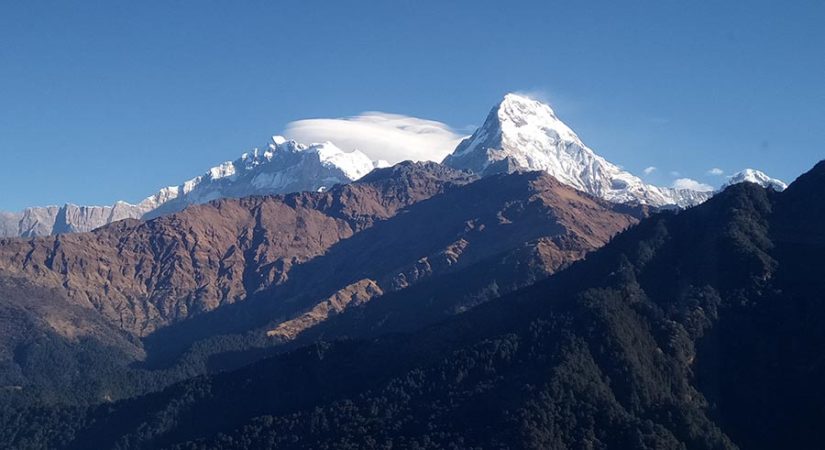


Why Best local Guide for Khopra Trek?
- Stunning Himalayan Mountain Views – Enjoy spectacular views of Dhaulagiri, Annapurna South, Fang, Nilgiri, and other snow-capped peaks
- Sacred Khayer Lake – Visit the beautiful Khayer Lake, a high-altitude sacred site surrounded by dramatic Himalayan scenery.
- Traditional Nepalese Villages – Explore charming mountain villages and experience their local culture, traditions, and hospitality.
- Rhododendron and Alpine Forests – Walk through lush forests filled with rhododendron, oak, pine, and diverse vegetation.
- Scenic Waterfalls and Mountain Streams – Discover refreshing waterfalls, streams, and rivers along the trekking trail.
- Beautiful Terraced Farmlands – See traditional terraced fields stretching across the hillsides around local villages.
- Himalayan Wildlife – Look for Himalayan tahr, monkeys, Danphe (Himalayan monal), and other mountain birds.
- Spectacular Sunrise and Sunset – Witness unforgettable sunrise and sunset over the Annapurna and Dhaulagiri ranges.
- Buddhist Monasteries and Stupas – Experience the peaceful spiritual atmosphere of local monasteries, shrines, and stupas.
- Panoramic Views from Khopra Ridge – Enjoy expansive views of the Annapurna and Dhaulagiri ranges from Khopra Danda, one of the trek's main highlights.
Khopra Trek Introduction:
The Khopra Trek is a mesmerizing journey that begins in the quaint village of Kimche in Nepal's Annapurna region. From there, trekkers follow a scenic trail that winds through lush forests and charming villages, offering glimpses of local life along the way.
As you ascend higher, the trail gradually opens up to reveal stunning views of snow-capped peaks, including the majestic Mt. Dhaulagiri and the iconic Annapurna South. The well-marked path is relatively moderate, with occasional steep sections that add a hint of adventure. There, trekkers follow a scenic trail that winds
Tea houses dot the route, providing cozy accommodation and hearty meals to weary travelers. Friendly locals welcome trekkers with warm smiles and hospitality, making each stop a memorable experience.
Altitude sickness, or AMS, can be a concern as you gain elevation, so it's important to acclimatize properly and listen to your Guide and Friends. Hiring a knowledgeable guide and porter can greatly enhance your trekking experience, as they not only navigate the trails but also share valuable insights about the region's culture and history.
One of the highlights of the Khopra Trek is witnessing the breathtaking sunrise from the summit of Khopra Ridge. As the first rays of light illuminate the surrounding peaks( Dhaulagiri(8167m, Annapurna South, Hiuchuli, and many more), you'll be filled with awe and wonder that words can hardly describe.
Along the way, you'll encounter diverse wildlife that calls this region home. From playful monkeys swinging through the trees to elusive mountain goats traversing the rugged terrain, every encounter adds to the magic of the journey.
After days of trekking, the trail eventually leads back to Pokhara, where weary but fulfilled adventurers bid farewell to the mountains that have captured their hearts. With memories of stunning vistas, warm hospitality, and unforgettable experiences, the Khopra Danda Trek leaves a lasting impression on all who embark on this incredible adventure.
The Khopra trek is a perfect choice for trekkers and hikers, who are looking for a peaceful, Less Crowded, short, and budget trek in the Annapurna region. It provides an opportunity to escape the crowded trekking trails and immerse oneself in the natural beauty of the Himalayan mountains. Whether you are a seasoned trekker or a first-time hiker, the Khopra trek is a must-visit destination for anyone looking for a unique and memorable trekking experience.
Why Choose a Local Guide for Khopra Ridge?
Choosing a local guide for the Khopra Ridge Trek gives you practical trail knowledge, personal support, and a more flexible trekking experience. Key benefits include:
Khopra Trek Route Options:
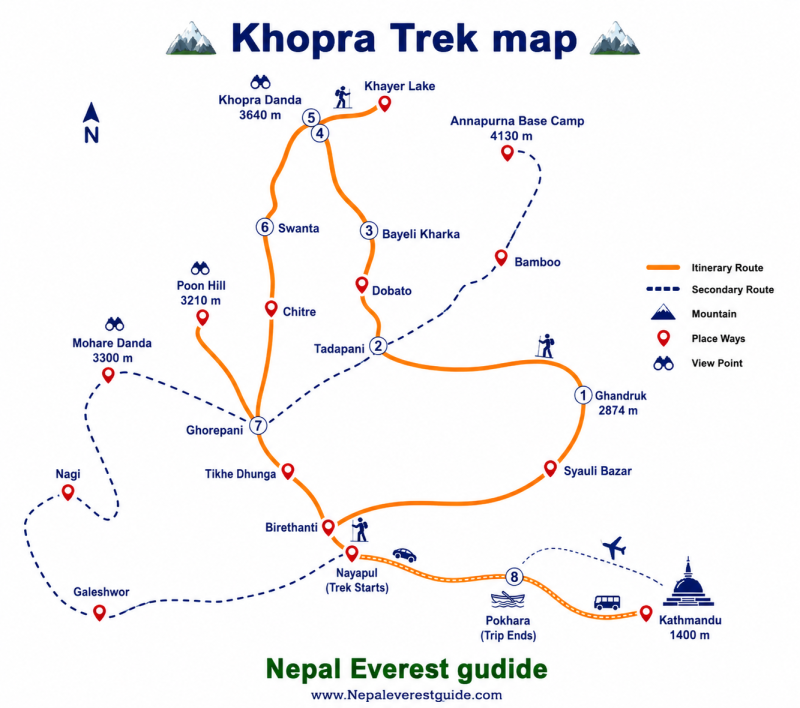
The Khopra Trek offers multiple route options, and the Nepal Everest Guide provides a 13-day itinerary that begins with your arrival in Kathmandu. The following morning, you will take a bus to Pokhara, a scenic lake city where you will spend a night before your trek. You will then hire a vehicle to Nayapul, from where you will start the Khopra Trek via the Ghorepani Poon Hill trek. This trek will take you to Poon Hill, a popular viewpoint that offers breathtaking views of the Annapurna and Dhaulagiri mountain ranges.
As you trek towards Dobato, you will experience the stunning scenery of Deurali, where two treks separate, one leading to Tadapani and the other to Dobato. From Mulde Peak, you can enjoy the best views of the Annapurna region. The trail from Bayeli to Shistibang is a descent through a dense forest until you reach Shristinbang.
Three hours further brings you to the Khopra Ridge, where you can admire the magnificent views of the surrounding mountains. A day hike to Khayer Lake is also possible from Khopra, but you will need to bring a packed lunch. The next stop on your journey is Swanta, before finally relaxing in.
Having an independent guide for the Khopra trek:
Having an independent guide for the Khopra trek has several benefits, including:
- Personalized attention: An independent guide will be focused solely on you and your needs, providing personalized attention and catering to your specific requirements.
- Flexibility: An independent guide will have the flexibility to tailor the itinerary to your pace, interests, and abilities.
- Local knowledge: An independent guide will have in-depth knowledge of the local culture, history, and geography, providing you with a deeper understanding of the region.
- Safety: An independent guide is trained and experienced in navigating the trail and will be able to ensure your safety while trekking.
- Convenience: An independent guide will take care of all logistics, such as arranging transport, booking accommodations, and carrying your belongings, allowing you to focus on the trekking experience.
- Cultural exchange: An independent guide will provide opportunities for cultural exchange and interaction with local communities, offering a more authentic and immersive experience.
- Cost-effective: Hiring an independent guide can be more cost-effective than booking a guided group tour, especially if you are traveling in a small group or as a solo traveler.
Best local Guide for Khopra Trek Outline
Day 1: Drive from Pokhara to Hile (1,430 m) and Trek to Banthanti (2,250 m) – 4-5 Hours Trek
Day 2: Trek to Ghorepani (2,874 m), Sunrise at Poon Hill (3,210 m), and Continue to Mohare Danda (3,300 m) – 7-8 Hours
Day 3: Trek from Mohare Danda (3,300 m) to Swanta Village (2,270 m) – 5-6 Hours
Day 4: Trek from Swanta (2,270 m) to Khopra Danda (3,660 m) – 6-7 Hours
Day 5: Morning Excursion to Khayer Lake Viewpoint (4,050 m) and Trek to Dobato (3,420 m) – 7-8 Hours
Day 6: Hike to Muldai Viewpoint (3,637 m), Trek to Ghandruk (1,940 m) and Drive to Pokhara (822 m) – 5-6 Hours Trek / 3 Hours Drive
What's included?
- Comfortable Tourist Bus: Round-trip tourist bus tickets between Kathmandu and Pokhara.
- Experienced English-Speaking Guide: A licensed, knowledgeable trekking guide familiar with the Khopra Ridge route.
- Tea House Accommodation: Comfortable twin-sharing rooms in local tea houses and lodges during the trek.
- Daily Breakfast: Breakfast throughout the trekking period.
- First Aid Kit: A basic first aid kit carried by the trekking guide.
- Guide Expenses: Guide salary, meals, accommodation, insurance, and other required expenses.
- Printed Trekking Itinerary: A detailed day-by-day itinerary for your Khopra Ridge Trek.
- Annapurna Conservation Area Permit (ACAP): Required entry permit for the Annapurna Conservation Area.
- TIMS Card: Trekkers’ Information Management System registration for the trek.
- Local Entrance Fees: Applicable local entry and route fees included in the itinerary.
What's not included?
- International Airfare: International flights to and from Nepal, including applicable airport taxes.
- Nepal Entry Visa: Nepal visa fees and related visa expenses.
- Travel Insurance: Travel and medical insurance, including high-altitude emergency evacuation coverage.
- Lunch and Dinner in Cities: Lunch and dinner in Kathmandu and Pokhara unless specifically mentioned in the itinerary.
- Personal Expenses: Personal shopping, snacks, toiletries, telephone calls, laundry, and other individual expenses.
- Drinks and Beverages: Bottled water, soft drinks, alcoholic beverages, tea, coffee, and other drinks outside the included meals.
- Personal Trekking Gear: Trekking clothing, boots, poles, sleeping bags, down jackets, and other personal equipment unless listed under inclusions.
- Hot Showers and Charging: Hot showers, Wi-Fi, and electronic device charging fees at tea houses and lodges.
- Extra Accommodation: Additional hotel or lodge nights caused by early arrival, late departure, itinerary changes, or an early return from the trek.
- Emergency and Unforeseen Costs: Expenses caused by bad weather, natural disasters, landslides, illness, road blockages, or other circumstances beyond our control.
- Tips and Gratuities: Tips for the trekking guide, porter, and driver after successful completion of the trek.
- Unlisted Services: Any service, activity, or expense not specifically mentioned in the Khopra Ridge Trek package inclusions.
Day by Day Itinerary
DAY
01
Drive from Pokhara to Ghandruk (1,940 m) and Trek to Tadapani ( 2,600m)
3 Hrs Drive & 4 Hours Trek Lunch & Dinner Lodge
We begin our Khopra Ridge Trek with a scenic drive from Pokhara to Ghandruk. The road takes us through Nayapul, Birethanti, and beautiful hillside settlements, with views of rivers, terraced fields, and traditional villages along the way. After reaching Ghandruk, we take some time for lunch and prepare for our first walk.
From Ghandruk, we follow a forest trail toward Tadapani. The route passes through rhododendron and oak forests, with small streams, waterfalls, and occasional mountain views. We walk at a comfortable pace with our local guide, taking short breaks along the way. After around 5–6 hours of trekking, we reach Tadapani and settle into a local teahouse for the night.
DAY
02
Tadapani to Bayeli Kharka (3,450 m)
5-6 Hours Breakfast, Lunch & Dinner Lodge
Today we leave the busy trails behind and enter a quieter part of the Khopra Ridge route. After breakfast, the trail gradually climbs through dense rhododendron and oak forests. The peaceful woodland walk is one of the special experiences of this section, and we may see different mountain birds along the way.
As we gain altitude, the forest begins to open and we reach alpine pasture areas used for grazing livestock. We take a lunch break on the trail or at a local lodge before continuing toward Bayeli Kharka. The final section brings wider views of the mountains, and on a clear day we may see Dhaulagiri (8,167 m) and surrounding peaks. We spend the night at a simple community lodge in this quiet mountain setting.
DAY
03
Bayeli Kharka to Khopra Danda (3,660 m)
5-6 Hours Breakfast, Lunch & Dinner Lodge
After an early breakfast, we continue toward Khopra Danda, the main destination of the trek. The trail first descends through forest before reaching Chistibang, where we can stop for a short rest. From here, the route climbs steadily through open pasture and gradually approaches the high ridge.
The landscape becomes more dramatic as we climb above the tree line. Your local guide will point out the surrounding peaks and help you maintain a steady pace as the altitude increases. From the trail and Khopra Ridge, clear weather can reveal Dhaulagiri (8,167 m), Annapurna South (7,219 m), Nilgiri (7,061 m), Fang, and other Himalayan peaks.
After approximately 5–6 hours of walking, we arrive at Khopra Danda at 3,660 m. We check into the community lodge, have time to rest, and enjoy the peaceful mountain views. If conditions are clear, the ridge is an excellent place to watch the changing colors of the mountains around sunset.
DAY
04
Khopra Danda to Khayer Lake and Return (3,660m)
7-8 Hours Breakfast, Lunch & Dinner Basic Lodge
Today is our Khayer Lake day, and we start early after breakfast. The trail from Khopra climbs gradually through rugged high-altitude terrain toward Khayer Lake, a sacred Himalayan lake and one of the major highlights of the trek. The route is more remote than the lower sections, so we walk slowly and take regular breaks.
The higher we climb, the more open and dramatic the landscape becomes. With clear weather, you can enjoy impressive views of the surrounding Annapurna and Dhaulagiri mountains. After reaching the Khayer Lake area, we spend some time taking photographs and enjoying the peaceful surroundings before beginning the return journey.
This is a long mountain day, so your guide will help manage the pace and breaks according to the group's condition. We return to Khopra Danda in the afternoon or evening and spend another night at the community lodge.
DAY
05
Khopra Danda to Ghorepani (2,860 m)
6-7 Hours Breakfast, Lunch & Dinner Lodge
This morning we leave Khopra Danda and begin our descent toward Ghorepani. After several days in the higher mountains, the trail gradually brings us back through forests, pastures, and lower mountain landscapes. We follow a quieter route before connecting with the more established trails around Ghorepani.
Along the way, we pass through local settlements and forested sections where the scenery changes noticeably as we lose altitude. We take a lunch break during the walk and continue at a comfortable pace. By late afternoon, we reach Ghorepani at around 2,860 m, a popular mountain village and an important stop on the Annapurna trekking route.
After checking into the lodge, you can rest and prepare for an early morning hike to Poon Hill the following day.
DAY
06
Early Morning Hike to Poon Hill, Trek to Ulleri and Drive to Pokhara
4-5 Hours Trek & 3 Hrs Drive Breakfast, Lunch & Dinner Lodge
We wake up early today and hike from Ghorepani to Poon Hill (3,210 m) to watch the sunrise over the Himalayas. As the sun rises, the mountains gradually light up, revealing beautiful views of Dhaulagiri, Annapurna South, Nilgiri, Machhapuchhre (Fishtail), and other surrounding peaks. After enjoying the sunrise and taking some final photographs, we return to Ghorepani for breakfast.
After breakfast, we begin our final descent toward Ulleri. The trail passes through rhododendron forests, stone steps, small settlements, and hillside landscapes. Your local guide will accompany you throughout the descent and help you walk comfortably on the steep sections.
We reach Ulleri, where our vehicle will be waiting for the drive back to Pokhara. Enjoy the changing scenery as we leave the mountain trails behind and travel through the hills toward the city. After arriving in Pokhara, your Khopra Trek comes to an end, leaving you with memories of quiet trails, local villages, high mountain views, Khayer Lake, Khopra Danda, and the beautiful Annapurna region.
Departure Dates
| Starts On | Ends On | Price (USD) | Availability | Booking |
|---|
Dear Trekkers, if you are planning the Khopra Ridge Trek with a group of 5 or more, I can offer you a special group rate. First-time clients can enjoy 10–15% off their first booking. Student groups and budget trekking groups can also receive special rates on request. Please feel free to contact me for a personalized quote. Thank you, and happy trekking!
Reviews
Evita
Australia
finest less touristy trekking path
2019When I decided to g to Nepal, I heard a lot about the Khopra trek and I research a lot about Khopra ridge than finally, I decide to do the Khopra trek. I found one recommend travel agency freelance guide and a director Mr. Gauli. I talk to him and he just sent me all the trip details including the itinerary and price, I compare also the price with a travel agency in Nepal, but Gauli gave me a reasonable price and I trek with them. They provide me a guide, Santu who have guided me to Khopra he explains to me a lot about Nepal and Khopra trek, I really had a wonderful time in the Himalayas of the Annapurna region. we had just a magical view all the time, especially from Khopra ridge. I wish I will come back very so and trek another beautiful trek Mardi Himal. However, Khopra trekking is more natural, peaceful, and one of the best trekking routes in Nepal. Just go and enjoy your holiday. if you need a travel agency for your trip freelance guide is recommended try it once they will provide you such wonderful services, even me I got more services than expected.
Essential Information
Best time to trek the scenic Khopra Trek(Ridge):
Spring (March to May): Spring is considered one of the best seasons for trekking the Khopra Ridge. During this time, the weather is mild and the temperature ranges from 10 to 20 degrees Celsius, making it perfect for trekking. The trekking trails are in full bloom with colorful rhododendrons and wildflowers, creating a magical and picturesque atmosphere. In addition, the skies are clear, providing unobstructed views of the Himalayan mountain range.
- Summer (June to August): Summer is another good time for the Khopra Ridge Trek. Although the temperature can be hot, reaching up to 25 degrees Celsius, the trek offers beautiful views of the greenery and forests. Additionally, this season is ideal for those who want to escape the monsoon season in the lower elevations.
- Autumn (September to November): Autumn is considered the peak season for trekking in Nepal, and the Khopra Ridge is no exception. The weather is pleasant, with temperatures ranging from 10 to 20 degrees Celsius, and the skies get clear, providing panoramic views of the Himalayas. The autumn foliage adds to the beauty of the trek, making it an unforgettable experience.
- Winter (December to February): Winter is not the ideal time for trekking the Khopra Ridge, as the temperature can drop below zero and the trails can be covered in snow and ice, making it difficult to navigate. However, for those who have experienced trekkers and are well-equipped for cold weather, this season provides unique and stunning views of the mountain range blanketed in snow.
In conclusion, the best time to trek the Khopra trek (Khopra Ridge) will vary depending on individual preferences, such as weather, scenery, and the difficulty of the trail. Regardless of the time of year, the Khopra Ridge (Khopra Danda)is a beautiful and breathtaking trek that should not be missed.
How are Accommodation and Meals during the Khopra Trek:
On the Khopra Trek, you stay in small local guesthouses called teahouses. These teahouses have simple beds, blankets, and food. They serve traditional Nepali meals like Dal Bhat (rice and lentils), fried noodles, fried rice, Gurung bread, chapati, pancakes, and momo (dumplings). Western dishes, including pizza, pasta, spaghetti, and sandwiches, are available. Remember, there might not be hot showers or Wi-Fi at every teahouse, but you might find them in bigger villages.
How long is the Khopra Trek?
The length of the Khopra Trek varies depending on the itinerary and pace of the trekker. On average, the trek takes about 7 to 10 days to complete. This includes the time it takes to travel from Pokhara to Nayapul, the starting point of the trek, and back. The actual trekking time, from Nayapul to Khopra Ridge and back, is usually 5 to 7 days. However, the length of the trek can be adjusted based on the trekker's preferences and fitness level. Some trekkers choose to add additional days to their itinerary to explore the surrounding area or to acclimate to the altitude.
What is the difficulty level of the Khopra Trek?
The difficulty level of the Khopra Trek is considered moderate to challenging. The trek involves several steep and strenuous ascents and descents, and the trail can be rocky and rough in some sections. The trek also reaches a maximum altitude of about 4,660 meters (15,290 feet) at Khopra Ridge, which can cause altitude sickness for some trekkers.
To successfully complete the Khopra Trek, trekkers should have a moderate level of fitness and be prepared for a physical challenge. It is also important to acclimate to the altitude gradually and to take appropriate precautions to prevent altitude sickness.
That being said, the Khopra Trek is accessible to a wide range of trekkers, including those with limited experience. With proper planning and preparation, most people should be able to complete the trek comfortably and enjoy the stunning scenery along the way.
Is permit compulsory for khopra trek?
Yes, a permit is required to undertake the Khopra Trek. The Annapurna Conservation Area Permit (ACAP) is the main permit required for trekking in the Annapurna region, including the Khopra Trek. This permit is issued by the Nepal Tourism Board and is intended to help protect the natural environment and the local communities in the Annapurna region.
The cost of the ACAP varies depending on the nationality of the trekker and the duration of the trek. For most nationalities, the cost is around 2,000 Nepalese Rupees (NPR) for a 10-day trek. The permit can be obtained in Kathmandu or in Pokhara, and trekkers may also be able to arrange for the permit through their trekking agency.
In addition to the ACAP, trekkers may also need to obtain a TIMS (Trekkers' Information Management System) card. The TIMS card is designed to help manage the flow of trekkers in the region and ensure that they are properly registered. The cost of the TIMS card is around 2,000 NPR for a 10-day trek.
It is important to obtain the necessary permits and to carry them with you during the trek. The permits will be checked by local authorities along the way, and trekkers without the proper permits may be fined or turned back.
Is Khopra trek safe to trek alone?
Trekking alone in the Khopra Trek or any other remote area can have certain risks and challenges, and it is generally recommended to trek with a guide or in a group.
Having a guide or a group can provide added safety and security, as they can help navigate the trail, provide support in case of an emergency, and offer valuable advice and information about the local culture and customs. Trekking alone can also increase the risk of getting lost, suffering from altitude sickness, or encountering other health or safety issues.
If you choose to trek alone, it is important to be well-prepared and to take the necessary precautions to ensure your safety. This includes obtaining the necessary permits, having appropriate gear and supplies, being in good physical condition, and being familiar with the local conditions and culture. It is also important to inform someone of your itinerary and to check in regularly, so that help can be dispatched in case of an emergency.
In conclusion, trekking alone in the Khopra Trek or any other remote area can be a rewarding and fulfilling experience, but it also requires a higher level of preparation, caution, and self-sufficiency. It is recommended to weigh the risks and benefits carefully and to make an informed decision based on your own experience and comfort level.
How high is the Khopra Trek?
The Khopra Trek reaches a maximum altitude of about 4,660 meters (15,290 feet) at Khopra Ridge, which is the highest point of the trek. This is considered a high altitude and can cause altitude sickness for some trekkers.
It is important to acclimate to the altitude gradually and to take appropriate precautions to prevent altitude sickness. This includes drinking plenty of water, avoiding alcohol and heavy meals, and taking it easy during the first few days of the trek. If you experience symptoms of altitude sickness, such as headache, nausea, dizziness, or fatigue, it is important to descend to a lower altitude and seek medical attention if necessary.
What is the terrain like on the Khopra Trek?
The Khopra Trek is a popular trekking route in the Annapurna region of Nepal. The terrain on the Khopra Trek is diverse and changes throughout the journey, offering breathtaking views of the Himalayas, lush forests, and charming local villages.
The trail starts with a climb through dense forests, passing by waterfalls and streams. As you gain altitude, the forest becomes more sparse and the views of the surrounding peaks become more prominent. On the way, you will cross suspension bridges, walk along narrow paths, and encounter steep sections that can be challenging.
Above the tree line, the trail becomes rockier, with several steep ascents and descents as you make your way towards the Khopra Ridge. The final stretch of the trek involves climbing steep stone steps to reach the summit of the ridge, where you will be rewarded with panoramic views of the Annapurna, Dhaulagiri, and Nilgiri mountain ranges.
Overall, the Khopra Trek is considered a moderate trek that offers a challenging and rewarding experience for those looking to explore the beauty of the Himalayas.
Are there any safety concerns on the Khopra Trek? 40 words
Yes, there are some safety concerns on the Khopra Trek, as with any trek in the high mountains. Some of the key risks include altitude sickness, weather-related hazards such as snowstorms and landslides, and the possibility of falling or slipping on the steep and uneven terrain. It's also important to be mindful of the wildlife in the area, such as Himalayan Thars and monkeys, and to take precautions to avoid encounters with them. To minimize the risk of these and other safety concerns, it's advisable to trek with a knowledgeable guide and to be well-prepared with the necessary gear, food, and supplies.
What type of accommodation is available on the Khopra Trek?
Accommodation on the Khopra Trek is typically provided in the form of tea houses, which are basic lodges that cater to trekkers. Tea houses offer simple rooms with shared or private bathrooms, as well as a dining area where you can enjoy local and basic Western-style food.
The tea houses are typically located in the villages along the trail and provide a unique opportunity to immerse yourself in the local culture and to interact with the friendly and hospitable Nepalese people. The rooms are basic but comfortable, with twin beds, warm blankets, and basic toilet facilities.
It's important to note that tea houses in the more remote areas of the trek may have limited facilities and supplies, so it's advisable to carry extra water and snacks in case of emergency. Some tea houses may also have solar-powered lights or charging facilities for a fee, but it's always a good idea to carry a headlamp or a backup battery for your phone or other electronics.
Is it necessary to hire a guide for the Khopra Trek?
While it is technically possible to do the Khopra Trek without a guide, it is generally recommended to hire a guide for several reasons. Firstly, a guide can provide valuable support and assistance in navigating the trail, which can be challenging in some sections, especially in poor weather conditions. They also have local knowledge of the area and can help you avoid potential hazards and safety risks.
Additionally, a guide can help you make the most of your trek by pointing out cultural and natural landmarks and sharing information about the local culture, history, and traditions. They can also serve as a valuable source of support and motivation, especially if you are feeling tired or unwell.
Moreover, hiring a guide is also important for responsible tourism, as it supports the local economy and helps to preserve the fragile mountain environment. By hiring a local guide, you are directly contributing to the livelihoods of the people who live in the region, and helping to promote sustainable tourism practices.
Overall, hiring a guide for the Khopra Trek is a smart choice for those who want to make the most of their trekking experience, stay safe and informed, and support the local community.
Is it possible to take a helicopter to the Khopra Trek?
Yes, it is possible to take a helicopter to the Khopra Trek. Taking a helicopter can be a convenient way to reach the starting point of the trek, especially if you have limited time or prefer to minimize the amount of time spent on the road.
However, it's important to note that taking a helicopter to the Khopra Trek is not the most environmentally friendly option, and it can also be expensive. Additionally, some trekkers prefer the experience of walking to the trailhead and the sense of adventure that comes with the journey, rather than taking a helicopter.
If you do decide to take a helicopter, it's advisable to book your flight in advance, as the availability of flights may be limited, especially during peak trekking season. It's also important to check the weather conditions and to be prepared for potential flight cancellations or delays, as the weather in the mountains can be unpredictable.
Overall, taking a helicopter to the Khopra Trek can be a convenient option for some trekkers, but it's important to weigh the costs and benefits carefully and to consider alternative options, such as taking a jeep or a bus to the trailhead.
Cancellation Note
- Free cancellation up to 60 days prior departure
- 30% of the total cost of the trip will be charged if cancelled between 60 to 30 days prior to departure date
- 60% of total cost of the trip will be charged if cancelled in between 30 to 14 days prior to departure date.
Web design & Developed by Wildstone Solution
